Brow lamination has become a popular way to create fuller, smoother, more lifted-looking eyebrows without needles or permanent pigment. The treatment is designed to redirect and set existing brow hairs, making them easier to style while creating a polished, brushed-up appearance.
If you are considering brow lamination for the first time, it helps to understand exactly what happens during the appointment, how long the results last, what aftercare involves, and whether the treatment is suitable for your skin and brow type. Brow lamination can make sparse, uneven, or unruly brows appear more uniform, but it does not create new hair or permanently change the shape of your natural brows.
This guide explains everything from the treatment process and before-and-after expectations to costs, alternatives, potential side effects, and the latest brow trends.
What Is Brow Lamination?
Brow lamination is a semi-permanent eyebrow treatment that chemically softens and reshapes the brow hairs so they can be brushed and set in a new direction. The result is usually a fuller, smoother, more defined appearance that can last for several weeks.
You may also hear it described as an eyebrow perm, although the goal is different from a traditional hair perm. Instead of creating curls, the treatment generally softens the brow hairs and sets them into a controlled direction, often upward and outward.
The treatment does not add hair, tattoo pigment, or artificial fibers. Instead, it works with the hairs you already have.
This distinction matters: if you have genuinely sparse areas with little or no hair, lamination can make existing hairs more noticeable, but it cannot replace missing eyebrow hair.
How Does Brow Lamination Work?
The process uses chemical solutions to temporarily alter the structure of the brow hairs so they become easier to reposition. Once softened, the hairs are brushed into the desired shape and treated with a setting or neutralizing solution.
A typical professional service involves:
- Consultation: The brow artist assesses your natural growth pattern, density, skin condition, and desired shape.
- Preparation: The eyebrow area is cleaned and prepared.
- Lifting or relaxing solution: A professional product is applied to soften the hair.
- Reshaping: The hairs are brushed into the selected direction.
- Setting solution: A neutralizing product helps hold the new arrangement.
- Conditioning: A nourishing product may be applied to help reduce dryness.
- Optional shaping or tinting: Some appointments include waxing, tweezing, or eyebrow tinting.
The exact products, processing times, and sequence can differ between systems and professionals, so the manufacturer’s instructions should always be followed.
What Happens During a Brow Lamination Treatment?
A professional appointment commonly takes around an hour or less, although the exact duration depends on the treatment system and any additional services.
Consultation and Brow Mapping
The appointment should begin with a discussion about your desired result. A skilled brow artist should consider your existing eyebrow shape rather than simply brushing every hair straight upward.
Questions worth discussing include:
- Do you want a soft, natural finish or a dramatic lifted look?
- Do your brow hairs naturally grow downward?
- Are there sparse areas?
- Have you previously experienced reactions to beauty products?
- Do you want brow tinting or shaping included?
Brow mapping or visual planning can help determine how the front, arch, and tail should sit.
Preparing the Brow Area
The brow area is cleansed so that makeup, oil, skincare residue, and other products do not interfere with the treatment.
The professional may also inspect the skin for irritation, cuts, active inflammation, or other issues that could make the appointment unsuitable.
Applying the Lifting Solution
The first chemical solution softens the brow hairs so they can be repositioned.
This is the step that makes the treatment different from simply brushing your brows with brow gel. The chemical process temporarily changes how the hairs behave.
Brushing and Reshaping
Once the hairs have been softened according to the product instructions, they are brushed into the desired position.
The direction is important. A good result does not necessarily mean every hair points vertically upward. The ideal direction depends on the natural growth pattern, face shape, brow density, and requested style.
Setting the New Shape
A neutralizing or setting solution is then used to help the hairs remain in their new arrangement.
The professional should avoid leaving products on longer than the manufacturer’s recommended processing time. Overprocessing can contribute to dryness and hair damage.
Conditioning and Finishing
A conditioning or nourishing product may be applied at the end.
If shaping or tinting is included, it may be performed according to the professional’s treatment protocol.
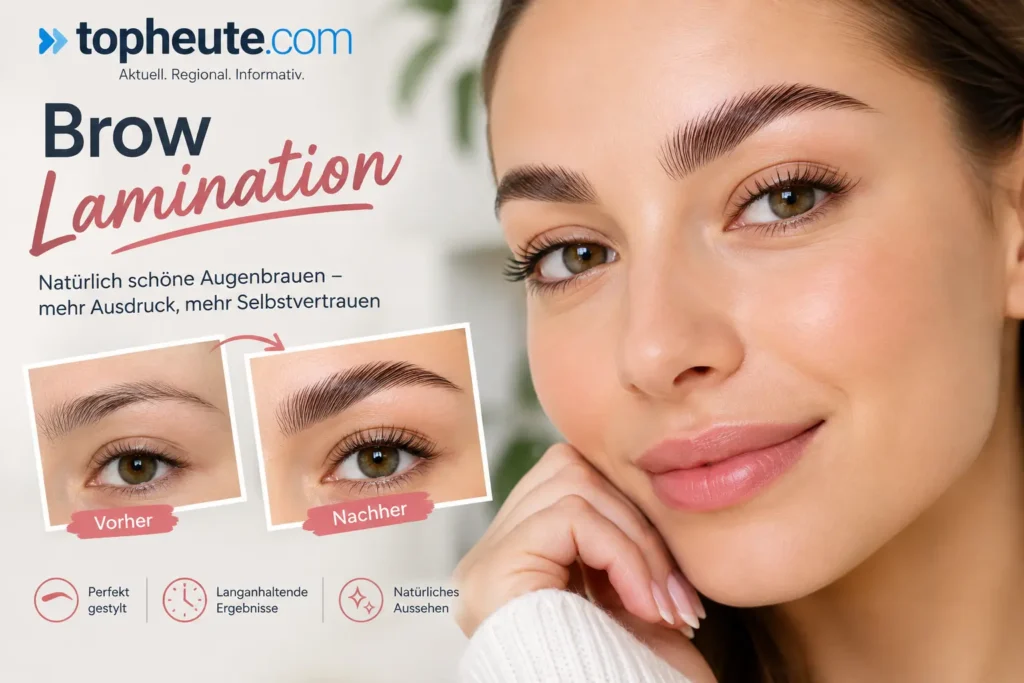
Brow Lamination Before and After
Before-and-after photographs can give you a useful idea of what the treatment can accomplish, but results are highly individual.
Before treatment, brows may look:
- Uneven
- Flat
- Downward-growing
- Curved or unruly
- Thin because the hairs lie close to the skin
- Disorganized because hairs grow in different directions
After treatment, the same brows may appear:
- More lifted
- More uniform
- Fuller-looking
- Smoother
- More defined
- Easier to style
The important point is that the treatment changes the position and appearance of existing hairs. It does not create new follicles.
If you have significant gaps, a brow artist may combine lamination with tinting or suggest another approach. Before-and-after photos should ideally show clients with a similar brow density and hair pattern to yours rather than relying only on highly edited social-media images.
What Are the Benefits of Brow Lamination?
One of the biggest advantages is that it can make existing eyebrow hairs easier to control without needles or permanent pigment.
Potential benefits include:
Fuller-Looking Brows
Brushing hairs upward and outward can expose more of their length, making the eyebrows look fuller.
Better Brow Definition
The treatment can make the brow shape appear cleaner because hairs stay organized rather than crossing in different directions.
Easier Daily Styling
Instead of repeatedly brushing and setting individual hairs every morning, the laminated hairs can remain easier to arrange.
A Non-Permanent Alternative
Unlike microblading or permanent makeup, the effect gradually wears off as the treated hairs return to their natural behavior and new hair grows through.
Useful for Unruly Hairs
People whose eyebrows naturally grow in different directions may find the treatment particularly useful.
However, benefits depend on your starting point. Someone with very sparse eyebrows should not expect the same dramatic visual change as someone with naturally dense but unruly brow hairs.
How Long Does Brow Lamination Last?
Results commonly last several weeks, with many professionals recommending waiting roughly six weeks or longer before another treatment. The exact duration varies with hair growth, skincare habits, product choice, and individual brow characteristics.
Factors that can affect longevity include:
- Natural hair growth cycle
- How frequently you wash or cleanse the area
- Exposure to water, steam, and swimming
- Use of exfoliating skincare
- Oils and skincare products around the brows
- The strength and processing time of the treatment
- Individual hair texture
A treatment that lasts longer is not necessarily a sign that the product was stronger or better. Hair health and appropriate processing should remain priorities.
Brow Lamination Aftercare
Aftercare is important because the brow hairs have recently undergone a chemical treatment.
Your professional should give you product-specific instructions, and those instructions should take priority because formulas differ. Generally, clients are advised to be gentle with the brows during the initial setting period.
The First 24 to 48 Hours
Depending on the product system used, your professional may recommend minimizing water, steam, heavy sweating, and manipulation during the early period.
Avoid repeatedly brushing the brows or pressing them against pillows while they are settling.
Keep the Area Gentle
Use mild cleansing practices around the brows and avoid aggressive rubbing.
Once normal cleansing resumes, gently pat the area dry rather than scrubbing the hairs.
Condition the Brow Hairs
A suitable conditioning product may help manage dryness. Ask your professional what product is compatible with the treatment you received rather than automatically applying heavy oils or random skincare products.
Protect the Skin
If your skin feels dry or sensitive after treatment, avoid adding unnecessary active ingredients around the area until it has settled.
What to Avoid After Treatment
Immediately after the service, avoid anything your professional specifically tells you could interfere with the treatment.
Common precautions may include avoiding:
- Excessive water exposure
- Steam rooms and saunas
- Heavy sweating
- Aggressive exfoliation
- Scrubbing the eyebrows
- Strong acids around the brow area
- Retinoid products around freshly treated skin
- Picking or scratching irritated skin
- Unnecessary heat exposure
The exact timing varies according to the product system, so do not assume that every brow treatment has identical aftercare instructions.
Brow Lamination Risks and Side Effects
Although the procedure is non-invasive, it still uses chemical products close to the eyes and on facial skin.
Possible side effects can include:
- Redness
- Itching
- Dryness
- Peeling
- Swelling
- Irritation
- Contact dermatitis
- Hair dryness or breakage
- Eye irritation if product enters the eye
Chemical exposure near the eyes deserves particular caution. Healthline notes that irritation can affect the brow area and eyelids, while improper exposure can pose a more serious risk to the eyes.
Overprocessing is another concern. Repeated chemical treatments can make brow hairs dry, brittle, or more prone to breakage.
Is Brow Lamination Safe?
For many people, a professionally performed treatment can be tolerated without major problems, but no cosmetic chemical treatment is completely risk-free.
Safety depends on factors such as:
- The products being used
- Correct processing time
- Professional technique
- Skin sensitivity
- Existing skin conditions
- Previous allergic reactions
- Whether products are kept away from the eyes
- Appropriate aftercare
A patch test may be recommended before treatment, particularly if you have sensitive skin or have never used the product before. Some professionals perform testing at least 24 hours in advance, while product instructions can specify different procedures.
A patch test can reduce uncertainty, but it cannot guarantee that a reaction will never occur.
If you experience significant swelling, blistering, severe pain, breathing difficulty, vision changes, or a severe allergic reaction after a cosmetic treatment, seek appropriate medical care promptly.
Who Should Avoid Brow Lamination?
Lamination may not be appropriate for everyone.
Extra caution may be needed if you have:
- Active irritation around the eyebrows
- Eczema affecting the treatment area
- Rosacea or highly reactive skin
- A history of contact dermatitis
- Known sensitivity to cosmetic chemicals
- Cuts, abrasions, or damaged skin around the brows
- An active infection around the treatment area
Healthline specifically identifies sensitive skin, rosacea, eczema, and a history of contact dermatitis as reasons to discuss suitability carefully before treatment.
If you have an ongoing skin condition or have previously experienced a serious cosmetic reaction, consider speaking with a qualified healthcare professional before booking.
Who Is Brow Lamination Best For?
The treatment can be particularly useful for people who already have a reasonable amount of brow hair but struggle with its direction or texture.
It may suit someone who wants:
- A brushed-up appearance
- A more uniform brow shape
- Easier everyday styling
- A temporary alternative to permanent brow procedures
- A way to make existing hairs appear more prominent
It may be less suitable if your primary problem is a complete lack of brow hair. In that situation, treatments that add visual pigment or other forms of cosmetic enhancement may address the concern differently.
Brow Lamination for Different Brow Types
There is no single brow shape that works for everyone.
Straight Brows
Straight hairs can sometimes be redirected upward and outward to create a more lifted appearance.
Curly Brows
Curly or wavy hairs require careful styling because excessive manipulation can produce an uneven result.
Downward-Growing Brows
These are often strong candidates because the treatment can redirect hairs that naturally point toward the skin.
Thick Brows
Dense brows can produce a dramatic fluffy appearance, but controlling the direction of a large amount of hair requires careful shaping.
Fine Brows
Fine hairs can look more visible after being lifted, although chemical processing needs to be controlled carefully.
Can Brow Lamination Make Brows Look Thicker?
Yes, it can make eyebrows look thicker, but it does not physically increase the number of hairs.
When individual hairs are brushed upward and spread across a larger visual area, more of the existing hair becomes visible. This can create the impression of increased density.
For example, imagine ten fine hairs lying almost horizontally against your skin. After they are lifted and separated, those same ten hairs can occupy more visible space.
That is why the result can look fuller without actual hair growth.
For genuine hair loss or substantial gaps, lamination has limitations.
How Much Does Brow Lamination Cost?
The price varies considerably by location, professional experience, salon positioning, and what is included in the appointment.
Published beauty-service prices have historically ranged from around $50 to $100 in some markets, while premium services in major cities can cost considerably more. Allure has reported examples ranging from approximately $75 to $250 depending on location and expertise.
Before booking, check whether the quoted price includes:
- Consultation
- Brow shaping
- Waxing
- Tweezing
- Tinting
- Conditioning treatment
- Aftercare products
- Follow-up advice
A lower price does not automatically mean better value, and a higher price does not automatically guarantee better results. Experience, hygiene, technique, and clear communication are more useful factors to evaluate.
Brow Lamination vs Microblading
These treatments work in completely different ways.
| Feature | Lamination | Microblading |
|---|---|---|
| Main purpose | Reposition existing hairs | Add pigment strokes to the skin |
| Needles | No | Yes |
| Pigment | Usually no | Yes |
| Result | Fuller-looking natural hairs | Hair-stroke appearance |
| Permanence | Temporary | Semi-permanent |
| Works with existing hair | Yes | Can visually fill sparse areas |
| Maintenance | Repeat treatment | Touch-ups may be needed |
Microblading involves inserting pigment into the skin using a blade or needle-based technique, while lamination changes the direction and appearance of existing brow hairs.
If you want to change the apparent density of an area with little hair, microblading addresses a different problem. If you mainly want existing hairs controlled and lifted, lamination may be the more relevant type of treatment.
Explore more amazing, latest, and insightful articles Visit ultrasound tech salary.
Brow Lamination vs Brow Tinting
Brow tinting primarily changes the color of eyebrow hairs, while lamination primarily changes their direction and texture.
Tinting can make light or fine hairs appear darker and more defined. Professional eyebrow tinting commonly lasts several weeks, although duration varies.
The two treatments can also be combined.
Think of it this way:
- Lamination: changes how the hairs sit.
- Tinting: changes how dark they look.
- Shaping: changes which hairs remain and defines the outline.
Combining them can create a stronger overall brow transformation, but it also means more products are being used around a sensitive area.
Brow Lamination vs Brow Gel
Brow gel is a temporary styling product. It coats and holds the hairs until the product is removed.
Lamination works differently because it chemically changes the hair’s ability to remain in a particular direction for a period of time.
Brow gel may be better if you:
- Want maximum control over your daily look
- Prefer not to use chemical treatments
- Change your brow style frequently
- Have very sensitive skin
- Want a low-commitment option
Lamination may appeal more to people who want their brows to remain easier to style for several weeks.
Professional vs At-Home Brow Lamination
At-home kits are widely available, but the fact that a product can be purchased does not mean that using it around the eyes is risk-free.
Professional treatment has several advantages:
- The practitioner can assess your skin.
- Processing time can be controlled.
- The product can be kept away from the eyes.
- The brow direction can be customized.
- The professional can recognize overprocessing.
- Shaping can be incorporated into the appointment.
Allure has warned that even at-home formulations can potentially damage brow hairs when used incorrectly and that chemical products this close to the eyes require particular care.
If you decide to use a home kit, follow its instructions exactly and never improvise with hair-perming chemicals or products that are not intended for the eyebrow area.
How Often Can You Get Brow Lamination?
Because the treatment chemically processes the hair, repeating it too frequently can increase the chance of dryness and breakage.
A common professional guideline is to allow roughly six weeks or more between treatments, depending on the condition and growth cycle of your brow hairs.
Do not schedule another appointment simply because the styling effect has faded if the hairs themselves are still dry, brittle, or damaged.
Healthy hair should be the priority.
How to Choose a Brow Lamination Professional
Choosing the right practitioner can make a significant difference.
Look for someone who:
- Regularly performs brow services
- Can show genuine before-and-after work
- Explains the treatment clearly
- Asks about allergies and skin sensitivity
- Uses products specifically intended for brows
- Follows appropriate hygiene practices
- Provides clear aftercare
- Does not promise unrealistic results
Ask to see photographs of clients with brow characteristics similar to yours.
You can also ask:
What products do you use?
Do you offer a patch test?
How long should I wait before my next treatment?
What happens if my skin reacts?
Is tinting included in the price?
What aftercare products do you recommend?
A professional who is willing to explain the process is generally easier to trust than someone who focuses only on selling the appointment.
Brow Lamination With Tint and Brow Shaping
Combining lamination with eyebrow tinting and shaping can create a more complete brow makeover.
Each service has a different purpose:
- Lamination: redirects the hairs.
- Tint: adds or enhances color.
- Waxing/tweezing: removes selected hairs.
- Brow mapping: helps plan the shape.
The combination can produce a polished result, particularly when the brow hairs are present but difficult to control.
However, combining treatments also increases the number of products used around the skin. Your professional should determine whether the combination is appropriate for your skin and the products involved.
Brow Lamination Trends in 2026
The biggest shift in brow styling is toward personalization rather than one universal “perfect brow.”
The overly rigid, extremely vertical brow is increasingly being balanced with softer styling that follows the natural growth pattern.
Current looks include:
- Soft brushed-up brows
- Feathered brows
- Fluffy but controlled brows
- Natural arches
- Softer tails
- Subtle brow tinting
- Partial or “baby” lamination
- Customized brow shapes
Partial lamination has also emerged as an option for people who want lifted fronts while leaving the rest of the brow more natural. Allure describes this approach as treating only approximately the first inch or inch and a half of the brow.
The key trend is customization. The most flattering result is not necessarily the most dramatic one.
Natural-Looking Brow Lamination
A natural finish starts with realistic expectations.
Instead of forcing every hair straight upward, a brow professional can adjust the direction across different sections of the eyebrow.
The front can be lifted slightly, the middle can follow the natural arch, and the tail can be directed outward.
This approach can create a polished appearance without making the eyebrows look stiff or excessively brushed up.
If you want a natural result, show your brow artist photographs that demonstrate the level of lift you prefer rather than simply saying you want “fluffy brows.”
Brow Lamination for Thin and Sparse Brows
Thin brows can sometimes benefit from the visual effect of lifting the existing hairs.
When fine hairs are separated and directed upward, they may cover more visible space and create a fuller-looking outline.
However, there is an important limitation: lamination cannot create hair where follicles are absent.
If your eyebrows have significant gaps from overplucking, scarring, or hair loss, discuss realistic options with a qualified professional.
For sparse brows, excessive processing can also be counterproductive because fragile hairs may become dry or break.
Brow Lamination for Unruly or Coarse Brows
Unruly eyebrows are among the situations where the treatment can be especially useful.
If hairs naturally point in several directions, lamination can temporarily make them easier to organize.
Coarse hair may require careful processing because strong or repeated chemical treatment can contribute to dryness.
The goal should be control rather than simply using the strongest possible treatment.
Brow Lamination and Sensitive Skin
Sensitive skin deserves extra attention because the products are applied directly to the facial area.
If you have previously reacted to cosmetics, hair dyes, adhesives, or chemical treatments, tell the professional before your appointment.
A patch test may be appropriate depending on the product and salon protocol. Keep in mind that a negative patch test does not guarantee that you cannot develop irritation during the full treatment.
People with active eczema, rosacea, dermatitis, broken skin, or significant inflammation around the eyebrows should discuss whether treatment should be postponed.
Common Brow Lamination Mistakes
Several mistakes can affect the final result.
Overprocessing the Hair
Leaving chemical solutions on longer than instructed does not necessarily create a better lift. It can increase dryness and breakage.
Repeating Treatments Too Soon
Booking another appointment before the brow hairs have recovered can increase cumulative stress.
Ignoring Natural Hair Direction
Forcing every hair vertically upward can create an unnatural appearance.
Using Too Many Active Skincare Products
Strong exfoliants and retinoid products around freshly treated skin may increase irritation.
Choosing a Style Without Considering Brow Density
A dramatic laminated style may look very different on sparse brows compared with dense brows.
Doing the Treatment Without Understanding the Product
Mixing products, changing processing times, or using unsuitable chemicals can create unnecessary risk.
How to Maintain Laminated Brows Between Treatments
Good maintenance is less about adding more products and more about treating the hairs gently.
Brush the brows softly with a clean spoolie when needed. Avoid aggressive pulling, repeated plucking, and excessive rubbing.
Use a suitable conditioning product if recommended by your professional.
Pay attention to the condition of the hair. If the brows become unusually dry, brittle, or prone to breakage, give them time to recover instead of immediately scheduling another chemical treatment.
Your everyday skincare routine also matters. Keep strong exfoliating products and other potentially irritating ingredients away from the brow area when your skin is sensitive.
What to Know Before Booking Brow Lamination
Before making an appointment, think about the result you actually want.
If your goal is fuller-looking brows, lamination may help if you already have enough hair to work with.
If your goal is darker brows, tinting may be more relevant.
If your goal is filling completely empty areas, lamination alone may not solve the problem.
If your goal is temporary control, brow gel may be enough.
If your goal is semi-permanent pigment, you are looking at a different category of treatment such as microblading.
Also consider your skin history, budget, maintenance preferences, and willingness to repeat the treatment.
A good consultation should answer these questions before any chemical product is applied.
FAQs
What exactly does brow lamination do?
It temporarily softens and resets eyebrow hairs into a chosen direction, usually creating a smoother, lifted, and fuller-looking appearance.
How long does brow lamination last?
Results commonly last several weeks. Many professionals recommend waiting around six weeks or longer before repeating the treatment, depending on hair condition and the specific product system.
Does brow lamination make eyebrows grow?
No. It does not stimulate new eyebrow growth or create new follicles. It makes existing hairs more visible by changing their direction.
Can you get brow lamination on thin eyebrows?
Yes, thin eyebrows can sometimes benefit because lifting the existing hairs can make them appear more prominent. However, it cannot fill areas where there is little or no hair.
Is brow lamination painful?
The procedure itself is generally not considered painful, although some people may experience temporary stinging, itching, or irritation from the products.
Can brow lamination damage your eyebrows?
It can contribute to dryness or breakage if the hair is overprocessed, treatments are repeated too frequently, or the products are used incorrectly.
Can you wash your face after brow lamination?
Follow the specific aftercare instructions provided by your professional and the product manufacturer. Many systems recommend keeping the brows relatively undisturbed during the initial setting period.
Can you wear makeup after the treatment?
Your professional may recommend avoiding makeup directly around the brows during the initial aftercare period. Follow the instructions specific to your treatment.
Can you get brow lamination if you have sensitive skin?
Possibly, but extra caution is appropriate. Discuss previous reactions and skin conditions with the professional, and ask whether a suitable patch test is recommended.
Is brow lamination better than microblading?
They solve different problems. Lamination changes the direction of existing hairs, while microblading deposits pigment into the skin to create the appearance of hair strokes. The appropriate choice depends on your desired result and existing brow density.
Does brow lamination work on coarse eyebrows?
It can help organize coarse or unruly hairs, but processing needs to be controlled carefully because coarse hair can still become dry or damaged.
How often should you laminate your brows?
Many professionals recommend allowing approximately six weeks or more between treatments, while also considering the condition of the hair.
Can brow lamination be done at home?
At-home kits exist, but chemical products around the eyes require careful handling. Professional treatment provides the advantage of trained application, controlled processing, and customized shaping.
Can you combine lamination with eyebrow tinting?
Yes, some salons offer the services together. The combination can alter both hair direction and color, but suitability should be assessed based on your skin and the products being used.
What should you do if your skin reacts after treatment?
Stop using potentially irritating products on the affected area and follow appropriate medical guidance. Significant swelling, blistering, severe pain, breathing problems, or eye symptoms warrant prompt medical attention.
Conclusion
Brow lamination is a temporary way to reshape and organize existing eyebrow hairs, creating a smoother, lifted, and fuller-looking appearance without needles or permanent pigment. It can be particularly useful for unruly, downward-growing, uneven, or naturally dense brows that are difficult to style.
The best results come from matching the treatment to your natural brow pattern rather than chasing an extreme look. Thin brows can appear more prominent, but the treatment cannot create new hair. Likewise, lamination can improve hair direction but cannot replace the functions of tinting or pigment-based treatments.
Before booking, consider your skin sensitivity, brow density, desired appearance, maintenance routine, and the experience of the professional. Ask about the products, patch testing, aftercare, pricing, and recommended treatment interval.
With realistic expectations, careful application, appropriate aftercare, and enough time between treatments, laminated brows can provide a polished everyday look while still allowing your natural eyebrow shape to remain part of the result.
Explore more amazing, latest, and insightful articles Visit Meijer Pharmacy