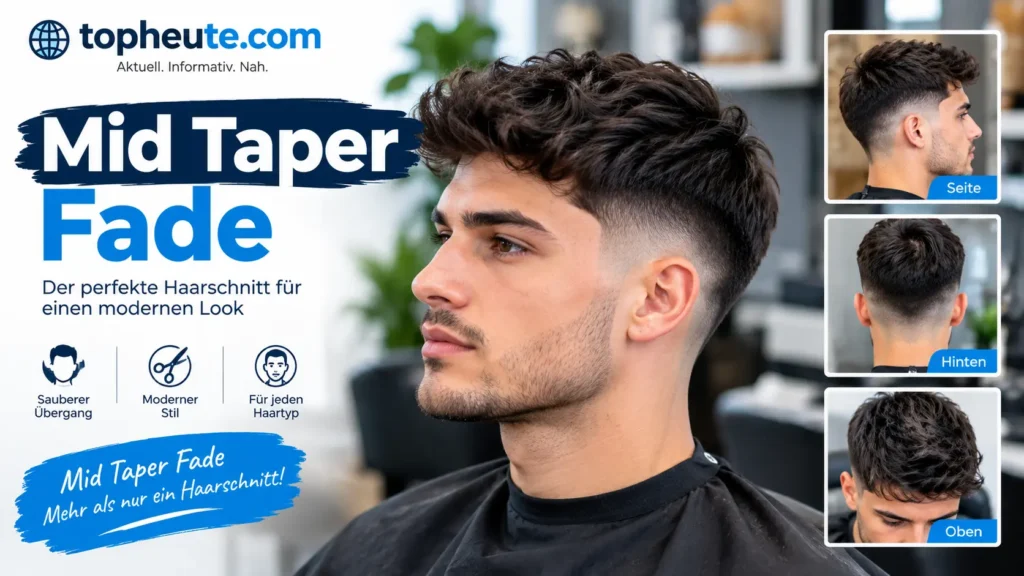
A great haircut can change the way you look, feel, and present yourself. Whether you prefer a clean professional appearance, a modern textured style, or a relaxed everyday look, choosing the right haircut depends on your hair type, face shape, lifestyle, and maintenance preferences. The mid taper fade has become a popular choice for men who want a balanced blend of sharp sides and a versatile top.
But what exactly makes this haircut different from other fades? How do you choose the right style for your hair? What should you tell your barber, and how can you keep the haircut looking fresh after leaving the barbershop?
This complete guide to the mid taper fade explains everything from its structure and popular variations to styling, maintenance, cost considerations, and choosing a barber. Whether you are discovering this haircut for the first time or looking for your next style, you will find practical information to help you make an informed decision.
What Is a Mid Taper Fade?
A mid taper fade is a men’s haircut where the hair gradually becomes shorter around the sideburns and the neckline, with the taper beginning around the middle area of the sides and back. The hair typically remains longer above the taper, allowing the top to be styled in various ways.
Unlike a haircut that removes most of the hair on the sides, a taper focuses on creating a gradual transition around specific areas. The result can be clean and subtle or more defined, depending on the barber’s technique and the finish you request.
Understanding the Main Parts
To understand this haircut, it helps to know the terminology barbers use.
- Taper: A gradual reduction in hair length around the sideburns and neckline.
- Fade: A blended transition between shorter and longer hair. The term can describe different levels of fading, depending on the haircut.
- Sides: The hair along the sides of the head, which can be left fuller above the taper.
- Neckline: The lower edge of the hair at the back of the neck.
- Blend: The smooth transition between different hair lengths.
- Top: The longer hair on the upper part of the head, which determines much of the final styling.
A taper does not automatically mean that the entire side of the head is shaved down. Your barber can adjust the amount of hair removed according to your preferred appearance.
How Does a Mid Taper Fade Look?
The taper generally begins around the middle of the side area, rather than starting very low near the ears or extending high toward the temples. The exact position can vary based on head shape, hair density, and the barber’s interpretation.
Some versions have a natural finish with visible hair around the lower sides, while others use a sharper, closer finish. Your choice of top length and styling can make the overall haircut look classic, sporty, modern, or creative.
Is a Mid Taper Fade the Same as a Mid Fade?
No. Although the names are similar, they refer to different haircut approaches.
A mid fade usually involves a more extensive fade across the sides, with the transition positioned around the middle of the head. A mid taper generally concentrates the taper around the sideburns and neckline, leaving more of the surrounding sides intact.
The distinction can vary between barbershops, so showing a reference photo is useful. Explain whether you want a subtle taper or a more extensive fade to avoid confusion.
Why Mid Taper Fade Is Popular in 2026
The appeal of this haircut comes from its versatility. It can work with different top lengths, hair textures, and personal styles without requiring everyone to choose the same finish.
A Balance Between Clean and Natural
Some men want their haircut to look polished without appearing overly shaved. A moderate taper can provide a neat outline while retaining more fullness on the sides.
This balance makes it suitable for people who enjoy both casual and dressed-up looks. However, the result depends on the haircut’s shape and how much contrast you request.
Works With Multiple Hairstyles
The top can be paired with a textured crop, fringe, curls, waves, a side part, or other styles. This flexibility allows the same basic haircut structure to be adapted to different preferences.
Suitable for Different Personal Styles
A subtle finish may appeal to someone who prefers a traditional look, while a sharper outline or styled top may suit someone looking for a contemporary appearance. There is no single version that works for everyone.
Easy to Customize
You can discuss the following with your barber:
- How short the sideburns should be.
- Whether the neckline should look natural or defined.
- How much length to retain on the sides.
- The shape and length of the top.
- Whether you want texture, volume, or a smooth finish.
The key is to customize the haircut around your actual hair and styling habits rather than choosing a trend solely because it looks good in a photograph.
Mid Taper Fade vs Low Taper Fade
The main difference is the approximate location where the taper begins.
A low taper fade usually starts closer to the bottom of the sideburns and neckline. A mid taper begins higher, around the middle region of the sides, creating a different transition and overall appearance.
Low Taper Fade
A low taper can provide a more understated appearance because the transition stays closer to the lower edges of the haircut. It may be useful for someone who wants to retain more fullness around the sides.
Mid Taper Fade
A mid taper places the transition higher than a low taper, which can create a more noticeable change in the side profile while still retaining length above the tapered area.
Explore more amazing, latest, and insightful articles Visit pharmacy technician.
Which One Should You Choose?
Consider your preferred level of contrast, the shape of your haircut, and how much hair you want to retain. Ask your barber to show you examples of both styles before deciding.
Inline question: Does a mid taper always look more modern than a low taper?
Not necessarily. Both styles can be modern or traditional depending on the top, outline, texture, and finishing technique. Your personal preference matters more than the name alone.
Mid Taper Fade vs Mid Fade
These terms are sometimes used interchangeably in informal haircut conversations, but they can describe different approaches.
A mid fade generally refers to a fade that rises to the middle area of the sides and back, while a taper normally focuses on a narrower area around the sideburns and neckline. The amount of hair removed and the resulting shape depend on the barber’s technique.
Key Differences
| Feature | Mid Taper | Mid Fade |
|---|---|---|
| Main focus | Sideburns and neckline | Broader side and back transition |
| Side fullness | Often retains more hair | May remove more hair |
| Overall appearance | Subtle to moderately defined | Can create stronger contrast |
| Customization | Top and taper finish | Fade height, blend, and top |
| Best approach | Discuss the exact reference | Specify the desired fade level |
The terminology is not perfectly standardized across every barbershop. Use a reference photo and explain how much of the sides you want shortened.
Best Mid Taper Fade Haircuts for Men
The same taper structure can be combined with numerous hairstyles. The best choice depends on hair texture, top length, maintenance requirements, and the appearance you want.
Classic Mid Taper Fade
The classic version combines a clean taper with a traditionally styled top. It can be paired with a short side part, a neat comb-over, or a naturally textured finish.
This option suits men who want a haircut that works in different settings without requiring an elaborate styling routine.
Mid Taper Fade with Textured Top
A textured top adds movement and definition by using different lengths and styling techniques. Instead of making the hair look completely flat, the barber creates a shape that can be enhanced with a small amount of styling product.
This style can work particularly well for straight or wavy hair, although the texture and final appearance depend on the hair’s natural characteristics.
How do you maintain texture on top?
Use a suitable styling product in a small amount, work it through the hair, and shape the top with your fingers or a comb. Avoid applying excessive product if you want a lightweight, natural finish.
Mid Taper Fade Short Hair
Short hair creates a low-maintenance option for men who prefer a simple routine. The top can be kept short and neat, reducing the amount of daily styling required.
You can ask for a short textured finish or a more uniform top, depending on your preference. Your barber should consider hair growth patterns and any areas where the scalp is more visible.
Mid Taper Fade with Curly Hair
Curly hair adds natural volume and texture to the haircut. The taper can create a clean outline while the curls remain longer on top.
The barber should work with your curl pattern rather than treating curly hair exactly like straight hair. The final length should account for shrinkage, which makes curls appear shorter when dry.
Helpful considerations include:
- Show your barber how your curls look naturally.
- Discuss the desired length when the hair is dry.
- Decide whether you want a rounded or more structured top.
- Keep the sideburns and neckline consistent with your preferred finish.
Mid Taper Fade with Straight Hair
Straight hair offers flexibility for styles such as a textured crop, fringe, side part, or comb-over. The right top length can help create movement or volume where needed.
If your hair lies flat, ask your barber for a shape that supports your styling routine. A lightweight product can add texture without making the hair feel heavy.
Mid Taper Fade with Waves
Wavy hair can provide a naturally relaxed appearance. The taper creates a cleaner outline while the waves add movement across the top.
The barber should consider the direction of your hair growth and how the waves behave at different lengths. Avoid choosing a reference based only on hair that has been heavily styled or edited.
Mid Taper Fade with Fringe
A fringe brings the front hair forward over the forehead. It can be short, textured, straight, or slightly messy depending on the cut.
Before choosing this style, consider how your hair naturally falls. A fringe may require some daily shaping, especially if your hair tends to separate or move in a different direction.
Mid Taper Fade with Edgar
An Edgar-style haircut typically features a defined front line and a short, structured top. Combining it with a taper creates a contrast between the clean front shape and the gradually shortened sideburns.
This style requires precise cutting, particularly around the front hairline. Discuss the desired shape with your barber and consider your natural hairline before requesting an extremely sharp finish.
Mid Taper Fade Mullet
A mullet keeps more length toward the back while creating a shorter, structured appearance around the sides. A taper can be integrated into this design to create a more gradual transition around the sideburns and neckline.
The final shape depends on how much length is retained at the back. Explain whether you want a subtle modern mullet or a more noticeable contrast.
Mid Taper Fade with Beard
A taper can be blended into a beard for a coordinated appearance. The barber may connect the sideburn area to the beard or maintain a separate transition, depending on your preference.
Before the service, discuss:
- The desired beard length.
- Whether the sideburns should connect naturally.
- How sharp or soft the beard outline should be.
- Whether the beard and haircut should have matching proportions.
The beard’s density and growth pattern can affect the final result, so a reference photo is helpful.
Explore more amazing, latest, and insightful articles Visit deviated septum.