
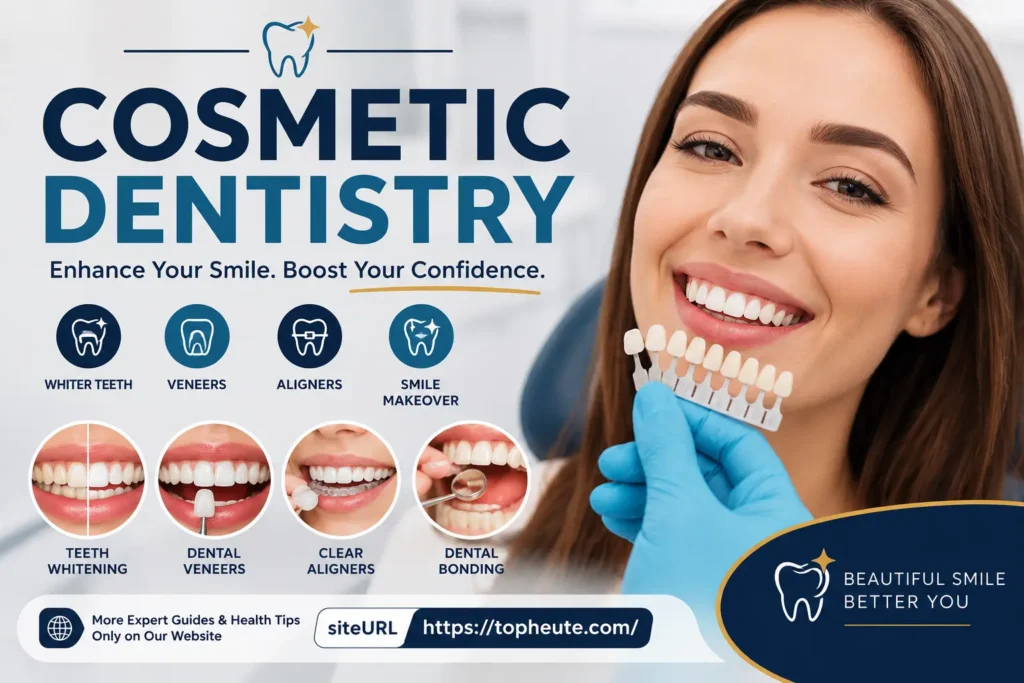
Cosmetic Dentistry: Complete Guide to Procedures, Costs, Safety and Results A healthier-looking, more balanced smile can affect confidence, photographs, social interactions, and how comfortable you feel when you speak or laugh. Modern cosmetic dental care offers several ways to improve tooth color, shape, spacing, proportion, and alignment, but the right option depends on the condition of your teeth, gums, bite, goals, budget, and how much tooth structure can safely be preserved.
This guide explains the subject from the ground up. You will learn what the treatment category includes, how consultations work, what procedures may be recommended, what affects price, how long results can last, what the risks are, and how to compare a dentist or treatment without relying on marketing claims.
Many people start with a simple question: “I do not like my smile—what can actually be changed?” The answer is broader than choosing between veneers and whitening. A cosmetic treatment plan may involve one procedure or several carefully sequenced procedures, and sometimes the best first step is treating a dental-health problem rather than changing appearance.
A good plan begins with diagnosis. A dentist should assess teeth, gums, existing restorations, bite, jaw function, tooth wear, decay, cracks, sensitivity, and other relevant findings before recommending elective changes. That foundation helps separate a suitable aesthetic improvement from a treatment that could create avoidable problems.
The goal should not be an unnaturally uniform smile. Modern aesthetic dentistry aims for results that fit the person: appropriate tooth length, width, shade, translucency, gum display, facial proportions, and functional bite. The most convincing result is usually one that looks like a better version of the patient’s natural smile.
What Is Cosmetic Dentistry?
Cosmetic dentistry is the area of dental care focused primarily on improving the appearance of teeth and the smile. Depending on the case, treatment can address discoloration, chips, small gaps, uneven edges, tooth shape, visible restorations, mild alignment concerns, or the overall harmony of a smile.
It is important to understand that aesthetic and restorative care can overlap. A tooth that is chipped, worn, or weakened may need treatment for both appearance and function. In those situations, the dentist may choose a restorative material or procedure that also produces a more natural-looking result.
What is the difference between an aesthetic goal and a dental-health goal? An aesthetic goal might be making teeth appear brighter or more even, while a health goal could be treating decay, gum disease, infection, or structural damage. Health problems generally need to be addressed before elective appearance-focused work.
Common terms you may encounter include aesthetic dentistry, smile design, smile enhancement, veneer treatment, professional tooth whitening, composite bonding, clear aligner therapy, and smile makeover. These terms can overlap, but they do not all describe the same procedure.
What Does Cosmetic Dentistry Include?
The exact menu differs by practice and by country, but common appearance-focused services include:
• Professional teeth whitening for natural tooth discoloration.
• Porcelain or ceramic veneers for selected changes in shape, color, size, or minor spacing.
• Composite bonding for chips, small gaps, altered tooth contours, and selected discoloration concerns.
• Gum contouring or reshaping when excessive or uneven gum display affects smile proportions.
• Clear aligners when tooth position is an important part of the aesthetic concern.
• Smile makeovers that combine multiple procedures into one coordinated treatment plan.
• Replacement or improvement of visible restorations when old fillings, crowns, or other dental work no longer harmonizes with the smile.
• Digital smile planning and diagnostic mock-ups when they are appropriate for evaluating proportions and expected changes.
Dental implants, crowns, bridges, and other restorative treatments may also contribute to an aesthetic result when missing, damaged, or heavily restored teeth are involved. However, these are not simply “beauty treatments”; they have important functional and biological considerations.
Cosmetic Dentistry Procedures
Each procedure solves a different type of problem. Choosing a treatment because it is popular is less useful than matching the procedure to the actual concern.
Veneers
Veneers are thin coverings bonded to the visible surface of selected teeth. Depending on the material and design, they can change apparent color, shape, proportion, and some forms of spacing or minor wear. Ceramic veneers can provide a highly aesthetic, durable surface, while preparation requirements vary by case.
Professional Teeth Whitening
Professional whitening uses peroxide-based products to lighten natural tooth color. It does not change the color of porcelain, ceramic, composite, crowns, or other existing tooth-colored restorations, so shade planning matters when restorations are already present.
Dental Bonding
Composite bonding uses a tooth-colored resin material that is shaped and bonded to the tooth. It can be useful for selected chips, small spaces, uneven edges, and localized shape changes. It is often more conservative than extensive indirect restorations, but composite can stain, wear, chip, or require polishing and repair over time.
Clear Aligners
Clear aligners can move teeth into improved positions when the bite and clinical situation are suitable. They may be part of an aesthetic plan when crowding, spacing, or tooth position is the main concern. Alignment may sometimes be better addressed before whitening, bonding, or veneers.
Gum Contouring
Gum contouring can reshape the visible gum margin in carefully selected cases. It may improve symmetry or tooth proportions when uneven gum levels or excessive gum display are contributing to the appearance of the smile.
Smile Makeover
A smile makeover is not one standardized procedure. It is a personalized plan that may combine whitening, alignment, bonding, veneers, gum treatment, restorative work, or other procedures. The sequence matters because one treatment can affect the shade, position, or design of another.
Types of Cosmetic Dentistry
There are several ways to classify aesthetic treatment. A practical approach is to group options by how they change the smile.
• Color-focused treatment: professional whitening and selected replacement of discolored restorations.
• Shape-focused treatment: composite bonding and veneers.
• Position-focused treatment: clear aligners or orthodontic treatment.
• Gum-focused treatment: periodontal or soft-tissue contouring when clinically appropriate.
• Combination treatment: coordinated smile makeovers involving more than one procedure.
• Restorative-aesthetic treatment: crowns, bridges, implants, or other restorations when damaged or missing teeth require functional reconstruction as well as aesthetic improvement.
Another useful distinction is conservative versus more involved treatment. Whitening and some bonding cases may preserve most or all visible tooth structure. Veneers can require preparation depending on the design and anatomy. Extensive restorative treatment can involve significantly more planning. The least invasive option that can predictably meet the patient’s goals is often worth discussing.
How Does Cosmetic Dentistry Work?
The process usually begins with a consultation rather than immediately drilling or placing anything. The dentist listens to the patient’s concerns, examines the mouth, reviews dental history, and identifies factors that could change the treatment plan.
What happens at the first appointment? Depending on the case, the visit may include photographs, digital scans or impressions, bite assessment, periodontal evaluation, shade assessment, radiographs when indicated, and discussion of previous dental work. Not every patient needs every diagnostic step.
The next stage is treatment planning. The dentist may explain several options, including what would happen if you did nothing, the expected benefits, limitations, maintenance, risks, and likely sequence. A digital smile preview or physical mock-up may sometimes help patients understand proposed changes, but a simulation is not a guarantee of the final clinical result.
During treatment, the sequence depends on the chosen procedure. Whitening may involve one or more sessions or a dentist-supervised home program. Bonding may be completed in a single visit in suitable cases. Veneers commonly require design, tooth preparation when needed, fabrication, try-in or evaluation, and final bonding. Alignment can take substantially longer.
After treatment, maintenance becomes part of the result. Regular dental examinations, professional cleaning when appropriate, good home care, dietary habits, protection from grinding, and repair or replacement when needed can all affect longevity.
Benefits of Cosmetic Dentistry
Potential benefits are not limited to whiter teeth. Depending on the treatment, patients may see improvements in:
• Tooth color and the appearance of staining.
• Minor chips, worn edges, and uneven contours.
• Small spaces or selected proportion concerns.
• Smile symmetry and visual balance.
• The appearance of old or mismatched visible restorations.
• Tooth alignment when clear aligners or orthodontic care are appropriate.
• Confidence in social and professional situations.
The benefit should be realistic. A cosmetic procedure cannot guarantee a particular emotional outcome, and it does not make unhealthy teeth healthy by itself. The strongest plans improve appearance while protecting oral health and respecting functional needs.
Explore more amazing, latest, and insightful articles Visit LVNV Funding LLC.
Who Is a Good Candidate for Cosmetic Dentistry?
A suitable candidate is generally someone with a specific aesthetic concern, realistic expectations, adequate oral health for the proposed procedure, and an understanding of maintenance. Age, tooth development, gum condition, bite, restorations, and medical or dental history can all affect suitability.
Before elective treatment, active tooth decay, significant gum disease, untreated infection, severe inflammation, or other problems may need attention. Bruxism or heavy clenching can also affect the choice and longevity of certain restorations.
Who should be cautious about treatment? Anyone expecting perfectly identical teeth, instant permanent results, or a procedure that can correct every problem without maintenance should have a detailed conversation with a dentist first. Some goals are better achieved with a different treatment, and some cannot be achieved safely.
A good consultation should also discuss what happens if the result needs adjustment. Ask how repairs are handled, what maintenance is expected, and which parts of the treatment are reversible or irreversible.
How Much Does Cosmetic Dentistry Cost?
There is no single price because the final fee depends on the procedure, number of teeth, materials, laboratory work, diagnostic needs, geographic market, dentist’s training and experience, complexity, and whether other dental treatment is required first.
For example, professional whitening is generally a different financial commitment from multiple ceramic veneers. Composite bonding may be less expensive per tooth than porcelain veneers, but its maintenance and repair needs can differ. A smile makeover can involve several procedures, so its total cost depends heavily on the treatment design.
What should a written estimate include? Ideally, it should identify the planned procedures, number of teeth, material or restoration type where relevant, diagnostic and laboratory charges, temporary work if needed, follow-up care, and what is included if an adjustment or repair becomes necessary.
Insurance coverage also varies. Elective appearance-only treatment is often excluded or limited, while treatment that has a substantial restorative or functional purpose may be handled differently depending on the policy. Patients should confirm benefits directly with their insurer and ask the dental office what payment options it offers.
Do not choose a provider on price alone. A very low quote may reflect differences in materials, laboratory standards, diagnostic planning, aftercare, experience, or what is actually included. The meaningful comparison is total value, safety, predictability, and long-term maintenance—not simply the starting fee.
Cosmetic Dentistry Before and After
Before-and-after photos can be useful, but they need context. Lighting, camera angle, tooth drying, whitening, editing, and changes in lip position can make results appear more dramatic than they are.
When evaluating a smile gallery, look for consistent clinical photography, multiple views, and cases that resemble your own starting point. Ask whether the images are genuine patient cases and whether the patient has consented to their use.
What makes a before-and-after case genuinely helpful? The best case presentation explains the original concern, treatment performed, number of teeth treated, material used, approximate timeline, and maintenance considerations. This helps a prospective patient understand the process rather than simply admire the final photograph.
Realistic aesthetics matter too. Natural-looking teeth usually have variation in translucency, texture, shape, and shade. A result that is extremely white or perfectly uniform is not automatically a better result.
How Long Does Cosmetic Dentistry Last?
Longevity depends on the procedure, material, tooth condition, bite, oral hygiene, diet, habits, maintenance, and the quality of the original treatment. There is no universal expiration date for every patient.
Whitening is temporary because teeth can gradually pick up new stains and natural tooth color can change. Bonding may require polishing, repair, or replacement as it ages. Ceramic veneers can last for many years when appropriately planned and maintained, but they are not indestructible or guaranteed to last forever.
What shortens the life of aesthetic treatment? Common factors include poor oral hygiene, untreated gum disease, frequent exposure to staining substances, biting hard objects, nail biting, opening packages with teeth, and uncontrolled grinding or clenching.
• Maintain daily brushing and interdental cleaning as advised by your dental team.
• Attend recommended examinations and professional cleanings.
• Wear a protective appliance if your dentist recommends one for grinding or sports.
• Avoid using restored teeth as tools.
• Follow the specific maintenance instructions for your material and procedure.
• Address chips, sensitivity, looseness, or changes promptly rather than waiting for a small problem to become larger.
Is Cosmetic Dentistry Safe?
Many aesthetic dental procedures can be performed safely when a qualified dental professional has assessed the patient and selected an appropriate technique. Safety depends on diagnosis, treatment planning, infection control, materials, operator skill, and patient-specific factors.
Every procedure has potential limitations or adverse effects. Whitening commonly causes temporary tooth sensitivity or gum irritation. Bonding can stain or fracture. Veneers can chip, debond, develop marginal problems, or require replacement, and preparation may permanently alter tooth structure in cases where enamel is removed.
A particularly important safety issue is unsupervised dental treatment. Procedures that alter teeth or gums should not be treated like ordinary beauty services. Unlicensed or poorly controlled treatment can miss decay or gum disease, damage tooth structure, create infection risks, or produce irreversible problems.
What should you ask before treatment? Ask who will diagnose you, what qualifications the provider has, what materials will be used, what alternatives exist, what is reversible, what the main risks are, and what happens if the result needs repair.
Cosmetic Dentistry vs Restorative Dentistry
The simplest distinction is purpose. Cosmetic care primarily aims to improve appearance, while restorative care focuses on rebuilding or replacing teeth that are damaged, diseased, or missing. In practice, the two often overlap.
A tooth with a large fracture may need a crown because it needs structural protection, but the crown can also be designed to match the surrounding teeth. A missing front tooth may require an implant-supported restoration or bridge for function, while its shade and shape are planned for aesthetic harmony.
Why does this distinction matter? It helps patients understand why a dentist may recommend treating a health or structural issue before an elective aesthetic change. A beautiful surface cannot compensate for untreated disease underneath it.
Porcelain Veneers and Cosmetic Dentistry
Porcelain veneers are thin ceramic restorations designed to cover the visible surface of selected teeth. They can be considered for concerns such as persistent discoloration, selected chips, shape irregularities, small spaces, or proportion changes when the teeth and gums are suitable.
The process normally involves examination and planning first. The dentist evaluates tooth structure, gum health, bite, shade, smile line, and the amount of change required. Depending on the case, preparation may be minimal or more substantial. Impressions or digital scans are then used to fabricate the restorations.
A try-in or provisional stage may be used to evaluate shape, length, shade, and overall harmony before final bonding. Once approved and clinically suitable, the restorations are bonded to the teeth according to the chosen material and technique.
Are porcelain veneers permanent? They are considered long-term restorations, not lifetime guarantees. They can eventually require repair or replacement, and the tooth may have been altered during preparation. That is why patients should treat veneers as a significant dental decision rather than a temporary beauty accessory.
Composite Veneers vs Porcelain Veneers
Composite veneers are made directly or indirectly from resin-based composite, while porcelain veneers are ceramic restorations. Both can produce attractive results, but they have different characteristics.
• Composite: often more conservative, easier to repair or modify, and potentially suitable for smaller changes.
• Porcelain: generally offers strong aesthetic properties and good stain resistance, but fabrication is more involved and replacement can be more complex.
• Composite: can be more susceptible to staining, surface wear, and chipping depending on material, location, bite, and habits.
• Porcelain: can also fracture or debond and should not be treated as indestructible.
• The best choice depends on tooth structure, bite, desired change, budget, maintenance expectations, and the dentist’s clinical assessment.
Which is better? There is no universal winner. A small edge repair may be well suited to composite bonding, while a larger aesthetic change across several visible teeth may make ceramic a more appropriate option. The correct comparison is case-specific.
Teeth Whitening and Cosmetic Dentistry
Professional teeth whitening is one of the least invasive ways to improve the appearance of natural tooth color. It can address many extrinsic stains and some intrinsic discoloration, but the response varies from person to person.
Whitening may be delivered in the dental office, through dentist-supplied home trays, or with appropriate over-the-counter products. The choice depends on the desired speed, starting shade, sensitivity, oral health, and professional assessment.
Can whitening change crowns or veneers? No. Bleaching changes natural tooth color but does not whiten ceramic or most existing tooth-colored restorations. If visible restorations are present, the dentist may need to plan the final shade carefully so the smile does not become mismatched.
Sensitivity is one of the most common temporary effects. Gum irritation can also occur if bleaching material contacts the soft tissues. Following professional instructions and using the correct amount of product can reduce avoidable problems.
Whitening is not a substitute for diagnosing discoloration. A single dark tooth, internal staining, decay, trauma, or an old restoration may require a different approach.
Dental Bonding for Cosmetic Improvements
Dental bonding uses tooth-colored composite resin to reshape or repair selected teeth. It can be useful for minor chips, small gaps, short or uneven edges, and localized cosmetic changes.
What happens during bonding? The dentist prepares the tooth surface, selects and layers an appropriate shade of composite, shapes the material, hardens it with a curing light, and then finishes and polishes the restoration. The exact technique varies by case and material.
One advantage is that bonding can often be completed relatively quickly and may preserve more natural tooth structure than some alternatives. However, it is not maintenance-free. Composite can pick up stains, lose surface polish, chip, or wear, especially when exposed to heavy biting forces.
Bonding can also be a useful diagnostic or transitional option in selected cases. A dentist may use it to test a change in shape or proportion before considering a more extensive restoration.
Invisalign and Cosmetic Dentistry
Clear aligner therapy can improve the appearance of a smile by moving teeth into healthier or more harmonious positions when the case is suitable. The term Invisalign refers to a specific clear-aligner system, while clear aligners more broadly describe the category.
Alignment can sometimes be the most conservative way to address crooked or crowded teeth because it changes position rather than covering the teeth with restorations. It may also create a better foundation for later bonding or veneers.
How long does clear aligner treatment take? It varies widely. Mild movement can be relatively short, while more complex tooth movement may take substantially longer. Compliance with the prescribed wear schedule and the biological response to tooth movement affect the timeline.
Clear aligners are not appropriate for every bite or dental condition. A dentist or orthodontic professional should determine whether the proposed movement is predictable and safe before treatment begins.
Smile Makeover With Cosmetic Dentistry
A smile makeover is a coordinated plan rather than a single standardized treatment. The purpose is to address several aesthetic concerns in a logical sequence while protecting function and tooth health.
A plan might involve whitening followed by bonding, alignment followed by veneers, gum contouring combined with restorative work, or replacement of mismatched restorations. Not every patient needs multiple procedures.
Why is sequencing important? Tooth shade, gum position, tooth length, alignment, and restoration design influence one another. For example, whitening natural teeth before selecting the shade of new restorations can help avoid a mismatch. Likewise, moving teeth before placing veneers can sometimes reduce the amount of restorative alteration required.
A good makeover plan should identify the starting condition, desired changes, alternatives, treatment sequence, expected timeline, maintenance, risks, and estimated financial commitment. It should also explain what will not be changed.
How to Choose a Cosmetic Dentist
Choosing a provider is one of the most important decisions in elective dental care. Start with qualifications, licensing, relevant training, experience with the procedure you are considering, and evidence of consistent clinical results.
• Review the dentist’s education, licensing, and relevant continuing education.
• Look for genuine case examples that resemble your own concern.
• Ask which materials and laboratories are used for indirect restorations.
• Ask how the dentist approaches conservative tooth preparation.
• Discuss alternatives rather than accepting a single treatment as the only option.
• Ask for a written treatment plan and clear explanation of fees.
• Understand maintenance, repair, replacement, and follow-up arrangements.
• Check that the practice follows appropriate infection-control and patient-safety procedures.
• Be cautious of unusually cheap treatment, pressure to decide immediately, or promises of permanent perfection.
What should a consultation feel like? You should have enough time to ask questions and understand why a procedure is being recommended. A trustworthy clinician should be willing to explain limitations and alternatives, not only show ideal before-and-after photographs.
Cosmetic Dentistry Financing and Payment Options
Elective dental treatment can represent a significant expense, especially when several teeth or multiple procedures are involved. Payment options vary by practice and location, so patients should ask for the complete financial picture before committing.
Possible arrangements may include paying in full, staged payments, practice-specific financing, third-party financing, or other payment plans. Approval requirements and interest or fees can vary, so compare the total amount paid rather than looking only at the monthly figure.
Does dental insurance cover cosmetic treatment? Purely elective appearance-focused procedures are often not covered, but coverage can differ when treatment has a restorative or functional purpose. Always verify the details of your own plan.
Ask whether consultations, scans, temporary restorations, laboratory charges, adjustments, follow-up visits, and replacement work are included. A transparent estimate makes it easier to compare providers fairly.
Cosmetic Dentistry Near Me
A local search such as “cosmetic dentist near me” usually signals that the patient is moving from research toward provider selection. At this stage, people commonly compare location, reviews, credentials, services, photographs, availability, price information, and the quality of the consultation experience.
If you are comparing local practices, do not rely on star ratings alone. Look at the substance behind them. Reviews that describe a specific procedure can provide more useful context than generic praise, although reviews should never replace professional evaluation.
What should you check on a local practice profile? Confirm the practice name, address, phone number, hours, services, photos, and current patient feedback. Then visit the practice website to see whether it provides detailed procedure information, genuine case examples, clinician credentials, and clear expectations.
For people traveling from a nearby neighborhood or city, also consider follow-up logistics. Veneers, bonding, aligners, and complex treatment may require review appointments, adjustments, or maintenance. A provider who is technically suitable but difficult to reach may be less convenient over the long term.
Hyper-local search also works best when it reflects reality. A practice should accurately state the communities and locations it serves rather than creating thin pages stuffed with city names. Patients benefit from genuine local information, while search engines benefit from consistent business and service signals.
FAQs
What is the best cosmetic dental treatment for yellow teeth?
Professional whitening is often considered first when the primary concern is natural tooth discoloration and the teeth and gums are healthy enough for bleaching. If discoloration is resistant to whitening or other shape and structural concerns are present, a dentist may discuss bonding or veneers instead.
Can cosmetic dental treatment fix chipped teeth?
Yes, selected chips can often be repaired with composite bonding. Larger fractures or teeth with significant structural damage may require a different restoration. The correct option depends on how much tooth structure remains and whether the tooth is healthy.
Are veneers better than bonding?
Neither is automatically better. Veneers can provide a durable ceramic surface and are useful for certain larger aesthetic changes, while bonding can be more conservative and easier to repair. Tooth condition, bite, desired result, budget, and maintenance expectations should guide the decision.
Can I whiten my teeth if I have veneers?
Whitening affects natural teeth, not the color of porcelain or other existing restorations. A dentist should assess the current shades and plan treatment to avoid an obvious mismatch.
Is teeth whitening permanent?
No. Natural teeth can gradually darken or pick up new stains. Maintenance may be needed depending on diet, habits, oral hygiene, and the original shade.
How long do dental veneers last?
Veneers can provide long-term service, but their lifespan varies. Material, preparation, bonding, bite, grinding, hygiene, diet, and maintenance all matter. They should be viewed as durable restorations rather than lifetime guarantees.
Is dental bonding reversible?
Bonding can often be removed or repaired more conservatively than many veneer procedures, but reversibility depends on how the tooth was prepared and what was done. Patients should ask the dentist exactly what tooth structure will be altered before treatment.
Can clear aligners improve my smile?
They can improve tooth position in appropriate cases. Clear aligners are not suitable for every type of crowding, bite problem, or tooth movement, so a professional assessment is necessary.
Does cosmetic dental treatment hurt?
The experience depends on the procedure. Whitening can cause temporary sensitivity, while bonding is often relatively comfortable. Veneer preparation may require local anesthesia when tooth structure is being altered. Your dentist should explain expected discomfort and aftercare before treatment.
How do I know whether I need veneers or whitening?
If the main issue is the shade of healthy natural teeth, whitening may be the simpler option. Veneers can address color plus shape, size, minor spacing, or surface concerns. A dental examination is needed to determine which approach is appropriate.
What makes a good smile makeover?
A good result is not simply the whitest or most uniform smile. It should fit the patient’s facial proportions, tooth anatomy, gum display, bite, and personal preferences while preserving as much healthy tooth structure as reasonably possible.
Can I get aesthetic dental treatment if I have gum disease or cavities?
Active dental disease generally needs to be evaluated and treated before elective aesthetic work. Healthy gums and sound teeth provide a better foundation for predictable treatment and long-term maintenance.
How should I compare prices from different dentists?
Compare the complete treatment plan rather than the advertised starting price. Check the number of teeth, material, laboratory work, diagnostics, temporary restorations, follow-up visits, maintenance, and repair policy. Two quotes that look similar may include very different services.
Conclusion
Improving a smile is not about choosing the most expensive procedure or copying someone else’s result. The strongest approach starts with a clear diagnosis, a specific goal, conservative treatment where appropriate, realistic expectations, and a plan for maintenance.
Whitening, bonding, veneers, clear aligners, gum contouring, restorative treatment, and combination smile makeovers each have a place. The right choice depends on the condition of the teeth and gums, the patient’s bite, the desired change, the time available, budget, and willingness to maintain the result.
For anyone considering treatment, the most useful next step is a thorough consultation with a qualified dental professional who can explain the options, limitations, risks, expected timeline, and complete cost. A confident decision comes from understanding not only what can be changed, but also what should remain untouched.
Explore more amazing, latest, and insightful articles Visit Flat Back Earrings.