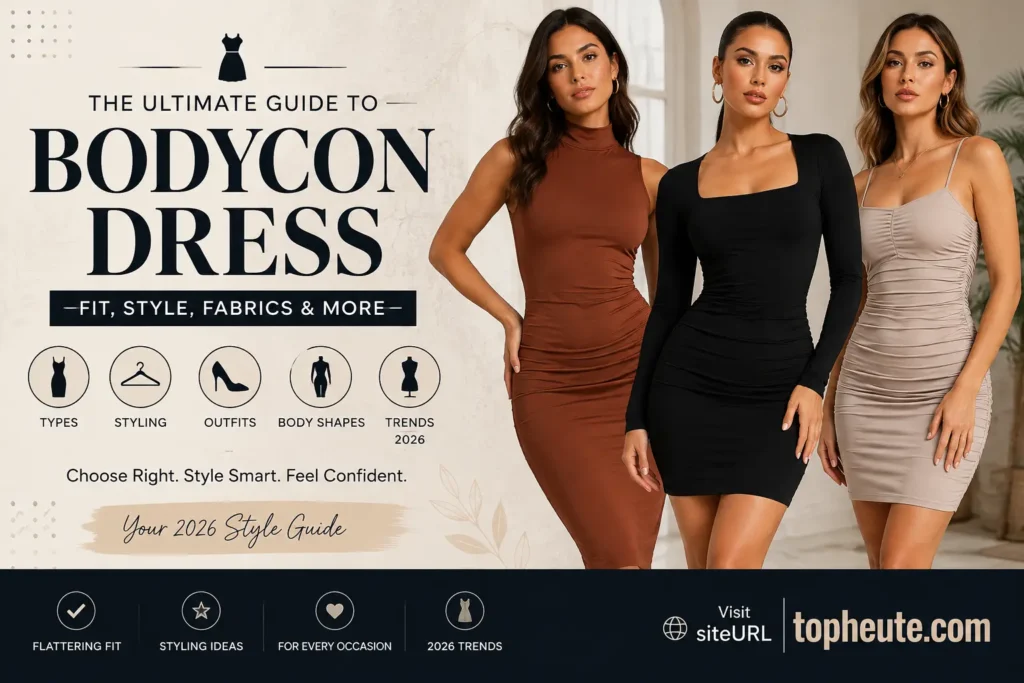
A fitted dress can look effortless when the cut, fabric, size, and styling work together. When those elements are mismatched, the same silhouette can feel restrictive, ride up while walking, show unwanted lines, or look less polished than expected. This guide breaks down the style from the ground up so a first-time buyer can understand what to look for and an experienced shopper can make better choices.
What should you focus on first? Fit comes before color, trend details, or accessories. A close-fitting garment should follow the body’s natural lines without making normal movement difficult. Fabric weight, stretch, recovery, opacity, seam placement, and length then determine how the finished look behaves.
The 2026 fashion conversation is also broader than the old idea that fitted dresses belong only to nightlife. Current styling favors versatility, layering, expressive color, texture, sheer elements, and a mix of polished and relaxed pieces. That makes a fitted silhouette useful for casual outfits, dinner, events, and transitional dressing when it is styled for the setting.
What Is a Bodycon Dress?
A bodycon dress is a close-fitting dress designed to follow the natural contours of the body. The term is short for “body-conscious,” referring to a silhouette that emphasizes rather than disguises the body’s shape.
Most versions use stretch fabrics such as jersey, ribbed knit, ponte, or blends containing elastane or spandex. Stretch allows the garment to sit close to the body while still permitting walking, sitting, and normal movement.
The important distinction is that close fitting does not mean painfully tight. A well-made garment should lie smoothly over the body. Excessive pulling at the bust, hips, or seams usually indicates that the size, cut, or fabric is not right.
Where does the style sit in the wider dress market? It is one of several fitted silhouettes. A sheath usually relies more on structured tailoring and a straighter, polished line, while a bandage dress typically uses heavier engineered stretch and construction to create a more sculpted effect.
What Makes a Bodycon Dress Different?
Three factors create the recognizable silhouette: the cut, the fabric, and the amount of ease built into the garment. The cut stays close to the body instead of adding volume through a full skirt, pleats, or a loose waist. Stretch lets the fabric move with the wearer.
Fabric recovery is particularly important. Stretch describes how far a material can extend; recovery describes how well it returns toward its original shape. A dress can feel stretchy in a fitting room but still lose its shape after hours of sitting if the material has poor recovery.
Opacity matters too. A thin fabric may become more transparent when it is stretched across the hips or bust. A denser knit can offer a smoother, more secure appearance, although heavier material may feel warmer.
Why does construction matter so much? Seams, hems, lining, neckline design, and panel placement can change how tension is distributed. Two dresses with similar measurements can therefore fit very differently.
How Should a Bodycon Dress Fit?
The ideal fit is close, smooth, and comfortable. The fabric should make contact with the body without digging into the skin or creating strong horizontal stress lines. You should be able to sit down, walk, raise your arms when appropriate for the design, and breathe normally.
Check the garment in motion rather than only while standing. Walk several steps, sit on a chair, bend slightly, and move your arms. If the hem repeatedly climbs, the neckline shifts, or the waist rolls, the problem may be the cut rather than your body.
Is sizing down a good idea for a more flattering result? Usually not. Going smaller can increase pulling, make the material more transparent, exaggerate seam stress, and reduce comfort. Use the seller’s size chart and compare your measurements with the garment’s intended fit.
Bust: The fabric should sit smoothly without flattening or creating sharp strain lines.
Waist: The garment should stay in place without digging into the skin.
Hips: There should be enough stretch for comfortable walking and sitting.
Length: The hem should stay reasonably stable during movement.
Armholes and shoulders: They should not pull when you move your arms.
Opacity: Check the fabric under strong indoor and natural light if possible.
A practical fit test is the two-minute movement test: walk, sit, stand, and reach. If you are adjusting the garment repeatedly, it is not functioning well as everyday clothing.
What Fabrics Are Best for a Bodycon Dress?
There is no single best fabric for every situation. The right choice depends on climate, occasion, desired structure, stretch, opacity, and how long you expect to wear the garment.
| Fabric | Strengths | Best Uses | Watch For |
| Jersey knit | Soft, flexible, comfortable | Casual and everyday outfits | Thin versions may cling or show lines |
| Ribbed knit | Stretchy texture, visual interest | Casual, transitional, daytime looks | Rib direction can emphasize or relax the silhouette |
| Ponte | Dense, stable, polished | Work and smart-casual dressing | Can feel warmer than lightweight knits |
| Elastane/spandex blends | Stretch and recovery | Close-fitting garments | Quality varies; check the full fiber blend |
| Scuba/neoprene-like knits | Structured, smooth, substantial | Statement and occasion looks | Can feel warm or less breathable |
| Velvet stretch | Rich texture, evening appeal | Cold-weather events | Can retain heat and require careful care |
| Satin or satin-finish stretch | Fluid, dressy surface | Evening and special occasions | Can highlight wrinkles and fit issues |
| Stretch lace/mesh | Texture and visual detail | Party and evening looks | May require lining for coverage |
For warm climates, breathability and fabric weight deserve extra attention. For cooler weather, denser knits and velvet can be more practical. In every climate, the fabric should have enough recovery to maintain its shape.
Is a high percentage of stretch automatically better? No. More stretch does not guarantee better quality. A good garment balances stretch, recovery, density, softness, and construction.
Types of Bodycon Dresses
The silhouette can appear in many lengths, necklines, sleeve shapes, fabrics, and surface details. Choosing among them is mainly about proportion, comfort, occasion, and personal style.
Mini Bodycon Dresses
Mini styles finish above the knee and create a youthful, energetic look. They work particularly well for parties, nights out, vacations, and casual summer outfits. For balance, pair a short hem with a more covered neckline or a structured outer layer when the setting calls for a polished result.
If the hem rides upward while walking, try a different fabric, a slightly longer length, or a better-supported cut rather than continually pulling the dress down.
Midi Bodycon Dresses
Midi lengths generally fall below the knee and around the calf, depending on the wearer. They are among the most versatile options because the longer hem can look refined with heels, boots, flats, or clean sneakers.
A side slit can improve stride and reduce the restrictive feeling that sometimes comes with a fitted longer skirt. The placement and height of the slit should still suit the occasion.
Maxi Bodycon Dresses
Maxi versions extend toward the ankle or floor while keeping a close silhouette. They can look elegant for evening events and can also work for resort or warm-weather dressing.
Pay attention to hem length. A long fitted dress that touches the floor can become difficult to walk in, especially with flat shoes. The right length should match the footwear you plan to wear.
Ribbed Bodycon Dresses
Ribbed knits use raised vertical or patterned ridges that add texture. Vertical ribbing can create a visually elongated line, while the stretch makes many versions comfortable for everyday wear.
Ribbed fabric is not automatically thick or opaque, so inspect the material rather than assuming texture equals coverage.
Ruched Bodycon Dresses
Ruching gathers fabric along selected areas, creating folds that add texture and visual movement. It can soften the appearance of small fit fluctuations and create an intentionally draped effect.
Ruching is especially useful when you want a fitted silhouette without a completely smooth surface. Look for adjustable ruching when you want more control over length or gathering.
Knit Bodycon Dresses
Knit styles range from lightweight jersey to substantial sweater-like constructions. They can be exceptionally comfortable because the fabric stretches naturally with movement.
For colder weather, a long-sleeve knit version can work with boots and a coat. For warm weather, a lighter knit can be paired with sandals and minimal accessories.
How to Choose the Right Bodycon Dress
Start with the use case. A dress for an office environment needs a different fabric and neckline from one intended for a party. Once the purpose is clear, choose length, fabric, coverage, and styling details.
Choose the occasion before choosing the trend detail.
Measure your bust, waist, and hips according to the retailer’s instructions.
Check the fiber composition and stretch characteristics.
Look for enough opacity under the lighting you expect to encounter.
Consider whether the dress is lined, especially when using thin or sheer materials.
Check the garment length against your height and preferred footwear.
Read care instructions before buying delicate or structured fabrics.
Review return and exchange terms when purchasing online.
What is the single most useful buying rule? Never judge a fitted garment only by its product photo. The same design can look and feel different depending on fabric weight, construction, body proportions, and size.
Explore more amazing, latest, and insightful articles Visit Lidocaine Patch.
Bodycon Dresses for Different Body Shapes
There is no body shape that is “allowed” or “not allowed” to wear this silhouette. The more useful approach is to choose cuts that make you comfortable and create the proportions you prefer.
| If You Want To… | Consider | Why It Can Work |
| Create a longer visual line | Midi/maxi length, vertical details | Long uninterrupted lines can visually elongate the outfit |
| Highlight the waist | Waist seams, strategic ruching, wrap-inspired details | Draws attention toward the center of the silhouette |
| Add upper-body interest | Square, halter, off-shoulder, or statement necklines | Moves visual focus upward |
| Balance strong curves | Simple fabric with controlled stretch and clean styling | Keeps the outfit cohesive rather than overly busy |
| Add dimension | Texture, ruching, draping, or layered outerwear | Introduces visual depth without changing the base silhouette |
| Prioritize comfort | Soft stretch knit and stable seams | Allows normal movement and reduces constant adjusting |
Fit should be judged by comfort and garment behavior, not by whether a person matches a fixed “ideal” shape. Modern styling is more useful when it gives options instead of rules.
Bodycon Dress vs Bandage Dress
Both silhouettes are fitted, but they are not identical. A bandage dress is commonly associated with thick, highly structured stretch material and engineered panels or strips that create a more sculpted effect. A body-conscious style generally relies more on the cut and stretch of the fabric itself.
The practical difference is feel. A bandage construction may provide more compression and structure, while a softer knit can offer greater everyday comfort. Neither is automatically better; the right choice depends on the occasion and how much structure you want.
Bodycon Dress vs Sheath Dress
A sheath dress is usually tailored to follow the body but may use woven fabric, darts, seams, lining, and more structured construction. It often creates a polished, streamlined appearance associated with professional or formal dressing.
A body-conscious knit typically has more stretch and a closer, more flexible feel. A sheath can therefore be the better choice when tailoring and structure matter, while a stretch knit may be preferable when movement and softness are priorities.
What to Wear Under a Bodycon Dress
The goal is a smooth foundation that does not compete with the dress. Seamless underwear, laser-cut edges, or appropriately fitted briefs can reduce visible lines. The best choice depends on the fabric, color, length, and level of coverage.
For thin or light-colored materials, choose underwear that is close to your skin tone rather than automatically choosing bright white. For open backs, low necklines, or strapless designs, select supportive options designed for that specific construction.
Do you need shapewear? Not necessarily. It is an optional styling tool, not a requirement. If you use it, choose a size that allows normal breathing and movement. Excessive compression can make sitting, eating, walking, or wearing the dress for several hours uncomfortable.
Avoid underwear that is too tight and creates its own visible edges.
Check the back and side seams in a mirror before leaving home.
For sheer fabrics, test coverage in bright light.
Match foundation garments to the dress construction rather than choosing one solution for every outfit.
How to Style a Bodycon Dress
Because the base silhouette is already close to the body, styling works best when each additional piece has a clear purpose. You can create contrast with a structured jacket, relaxed outer layer, textured accessory, or different shoe shape.
A useful 2026 formula is one fitted foundation plus one contrasting volume or texture. For example, a fitted midi can be paired with an oversized blazer, relaxed trench, chunky cardigan, or statement coat. This keeps the outfit intentional rather than making every item equally tight.
For minimal styling: simple shoes, small jewelry, and a clean bag.
For contrast: add an oversized blazer, trench, denim jacket, or cardigan.
For evening: use refined jewelry, a compact bag, and dressier footwear.
For casual wear: use sneakers, flat sandals, or a relaxed jacket.
For colder weather: add opaque tights, boots, and a substantial coat.
What Shoes Go With a Bodycon Dress?
The right footwear depends on the dress length and occasion. Heels create a dressier effect, while flats and sneakers make the same silhouette more relaxed.
| Footwear | Best For | Styling Effect |
| Strappy heels | Date nights and evening events | Dressy and streamlined |
| Pumps | Work and formal occasions | Polished and classic |
| Ankle boots | Fall and transitional outfits | Modern and slightly edgier |
| Knee-high boots | Fall/winter styling | Strong seasonal statement |
| Clean sneakers | Casual and daytime looks | Relaxed and contemporary |
| Flat sandals | Summer and resort outfits | Light and effortless |
| Ballet flats | Daytime and polished casual looks | Soft and understated |
What to Wear With a Bodycon Dress?
Outer layers are one of the easiest ways to change the character of a fitted dress. A blazer makes it more tailored, a denim jacket makes it casual, a trench adds polish, and a cardigan creates softness.
Accessories should support the outfit rather than overwhelm it. If the dress has ruching, cutouts, sequins, or a strong neckline, simpler jewelry can prevent visual competition. If the dress is plain, a statement bag, belt, scarf, or jewelry can become the focal point.
Color is another easy tool. A neutral dress can handle stronger accessories, while a vivid dress may look more balanced with neutral shoes and a simple bag.
How to Make a Bodycon Dress Look Elegant
Elegance comes less from the silhouette itself and more from proportion, fabric quality, grooming, and restraint. A clean neckline, substantial fabric, neat seams, appropriate length, and well-fitted footwear can immediately make the outfit feel more refined.
Choose fabric with enough weight and recovery for a smooth finish.
Avoid obvious pulling around seams.
Keep accessories intentional rather than excessive.
Use structured outerwear when you want a more polished appearance.
Choose footwear that matches the formality of the event.
Keep the color palette coordinated.
Make sure the garment is steamed or pressed according to its care instructions.
How to Style a Bodycon Dress for Different Occasions
The same silhouette can work across multiple settings when the fabric, length, neckline, footwear, and layering are adjusted. Occasion is not just about how the dress looks; it is also about comfort, movement, venue expectations, and dress code.
Bodycon Dress for Casual Wear
For daytime dressing, choose a simple knit or jersey version and pair it with sneakers, flat sandals, or casual boots. A denim jacket, relaxed shirt worn open, or lightweight cardigan can soften the fitted line.
A midi length is especially versatile because it can move between errands, lunch, travel, and casual social plans without feeling overly formal.
Bodycon Dress for Date Night
For dinner or a date, focus on one polished focal point. Satin-finish fabric, velvet, a refined neckline, or subtle draping can make the outfit feel special. Add heels or sleek boots and keep the accessories coordinated.
Comfort still matters. A date outfit that requires constant adjustment is rarely as successful as one that fits correctly and lets you move naturally.
Bodycon Dress for Parties
Party styling allows more experimentation with color, texture, metallic details, sequins, cutouts, or statement sleeves. Balance stronger details with simple accessories if the dress already has a lot of visual activity.
For dancing or extended standing, test the dress in motion before the event. A slit, stretch panel, or breathable fabric can make a significant difference.
Bodycon Dress for Weddings
A fitted dress can work for a wedding when it respects the invitation’s dress code, venue, time of day, and cultural expectations. Sophisticated midi lengths, elegant draping, tasteful ruching, refined necklines, and polished fabrics are often easier to adapt than extremely short or club-focused designs.
Avoid choosing white or bridal-looking shades unless the couple’s dress code specifically permits them. For outdoor summer celebrations, breathable fabrics and comfortable footwear can be more practical than heavy construction.
Current wedding fashion continues to include fitted silhouettes, with ruching, stretch mesh, and polished details appearing among contemporary guest options. citeturn0news21
Bodycon Dress for Work
Workwear depends heavily on the workplace. In conservative environments, a structured sheath-style alternative or a less clingy knit may be more appropriate. In creative or business-casual settings, a midi knit can work with a blazer, modest neckline, and polished shoes.
The goal is professional presentation, not simply covering more skin. Fabric opacity, hem length, neckline, and ease of movement matter just as much as the silhouette.
How to Style a Bodycon Dress for Every Season
Seasonal styling is mainly a conversation between fabric, layering, footwear, and weather. A versatile fitted dress can stay in rotation throughout the year if you change the supporting pieces.
Spring: Choose lighter knits, sneakers, ballet flats, or loafers with a lightweight jacket. Soft colors, floral details, and transitional layers work well.
Summer: Prioritize breathable, lightweight fabrics, comfortable necklines, and sandals. In hot climates, avoid unnecessarily heavy layers and choose garments that allow airflow.
Fall: Add ankle or knee-high boots, a denim jacket, blazer, cardigan, or trench. Richer textures and deeper colors can make the outfit feel seasonal.
Winter: Use long coats, tights, boots, and warm knit layers. A substantial fabric can provide better coverage, while a fitted base layer helps keep the silhouette clean under outerwear.
In 2026, transitional styling is particularly useful: lightweight dresses are being carried into cooler weather through boots, structured coats, scarves, and layered pieces. Runway and street-style coverage also shows strong interest in bold color, statement outerwear, sheer elements, and early-2000s references. citeturn0news22turn0news23turn0news26
2026 Bodycon Dress Trends
The strongest 2026 direction is not one single dress shape. Instead, fitted silhouettes are being refreshed through texture, color, layering, and more varied styling.
Ruching and draped details that add movement to a close silhouette.
Ribbed and textured knits for everyday wear.
Sheer or mesh elements used strategically rather than necessarily across the entire garment.
Bold color used as the main statement instead of relying only on black.
Statement outerwear that contrasts with a streamlined base.
Early-2000s and 1990s references interpreted through modern proportions.
More occasion-flexible styling, including sneakers, flats, boots, and tailored layers.
Comfort-focused fabric choices that still provide stretch and recovery.
Current 2026 fashion reporting highlights strong color, sheer dressing, texture, statement accessories, and transitional layering, while runway coverage points to both minimalist and early-2000s references. citeturn0news23turn0news26
One important buying trend is also greater attention to fabric quality. Consumers and fashion coverage are increasingly questioning low-quality synthetic materials and fast-fashion construction, making fiber content, durability, transparency, and care more relevant when comparing garments. citeturn0news24
Bodycon Dress Styling Mistakes to Avoid
Sizing down simply because the garment is supposed to be fitted.
Ignoring transparency when fabric is stretched.
Choosing a fabric that is too warm for the climate.
Wearing an inappropriate foundation garment that creates visible lines.
Ignoring the event dress code.
Pairing every fitted piece with another fitted piece when a contrasting layer would improve balance.
Choosing footwear that makes walking difficult with a long hem.
Over-accessorizing a dress that already has cutouts, ruching, sequins, or a dramatic neckline.
Ignoring care instructions and then expecting the fabric to keep its original recovery.
Buying based only on model photos without checking measurements and garment details.
The most common mistake is treating the silhouette as the entire outfit. A successful look depends on the relationship between fit, fabric, proportion, footwear, layers, and context.
How to Buy a Bodycon Dress Online
Online shopping removes the opportunity to try the garment on first, so product-page research becomes essential. Start with measurements rather than your usual size label because sizing can vary substantially between brands and even between collections.
Measure bust, waist, and hips with the tape level and without pulling it tightly.
Compare your measurements with the seller’s size chart.
Read the fiber composition instead of relying on terms such as “stretchy” or “premium.”
Check whether the material is lined and whether the product description discusses opacity.
Look for garment measurements such as total length when provided.
Study customer reviews for comments about transparency, riding up, sizing, and fabric recovery.
Check product photos from multiple angles.
Confirm shipping, return, exchange, and final-sale rules before ordering.
Think about the footwear you will use and compare the dress length accordingly.
When possible, order from sellers that provide clear measurement information and realistic product photography.
What should you look for in customer reviews? Search for repeated comments rather than relying on one extreme review. If several buyers mention that the material becomes transparent when stretched, that is more useful than a single statement saying the dress is “amazing.”
For shoppers in hot climates, prioritize breathable construction and manageable fabric weight. In Pakistan and other regions with intense summer heat, this can be especially important; local seasonal fabric choices frequently emphasize breathability and comfort alongside appearance. citeturn0search4
FAQs
What does bodycon mean in fashion?
It means body-conscious. The garment is designed to sit close to the body and follow its natural contours.
Is a bodycon dress supposed to be very tight?
No. It should be close fitting, but you should still be able to breathe, walk, sit, and move normally. Strong pulling, discomfort, or repeated adjustment usually indicates a poor fit.
What is the best fabric for a fitted dress?
It depends on the use. Jersey and lightweight knits work well for casual wear, ponte offers more structure for polished outfits, and velvet or satin-finish materials can suit evening occasions. Stretch and recovery are important regardless of the fabric.
Can a bodycon dress be worn casually?
Yes. A simple knit or jersey version can be paired with sneakers, flat sandals, a denim jacket, or a relaxed cardigan for everyday outfits.
What should I wear under a bodycon dress?
Choose smooth, well-fitting underwear with minimal visible edges. Seamless or laser-cut styles can reduce lines, while foundation garments should be selected according to the dress’s neckline, back, and fabric.
Do I need shapewear?
No. Shapewear is optional. If you choose to wear it, prioritize comfort and correct sizing rather than maximum compression.
What shoes look best with a fitted dress?
Heels create a dressier appearance, while sneakers, flats, sandals, and boots can make the outfit more casual or seasonal. The best choice depends on the occasion, hem length, and comfort.
Can I wear a fitted dress to a wedding?
Yes, if it fits the invitation’s dress code and the setting. A sophisticated midi, refined fabric, tasteful ruching, or elegant draping can make the silhouette appropriate for many wedding events.
Can I wear one to work?
It depends on the workplace. In conservative offices, choose a less clingy or more structured option. In business-casual or creative environments, a polished midi with a blazer and appropriate shoes can work.
How do I stop a fitted dress from riding up?
Check the size, fabric recovery, length, and construction. A dress that is too small or has insufficient stretch can move upward as you walk. A slit or slightly different length can also improve mobility.
How do I know if the fabric is too thin?
Check it under bright light, inspect it while the garment is stretched, and look for repeated reviews mentioning transparency. A lining can improve coverage.
Are midi lengths more versatile than mini lengths?
Often yes. A midi can move more easily between casual, work-appropriate, dinner, and event styling, although the best length depends on your preferences and the dress code.
What is the difference between a body-conscious style and a bandage dress?
A bandage dress is generally associated with heavier, highly structured stretch material and engineered paneling, while a body-conscious knit usually relies more on stretch fabric and a close cut.
What makes a fitted dress look expensive?
Fabric quality, clean construction, good recovery, proper fit, appropriate length, neat styling, and coordinated accessories usually matter more than a high price tag.
Are fitted dresses still fashionable in 2026?
Yes. The silhouette continues to appear in contemporary styling, but current fashion is refreshing it through ruching, texture, color, sheer details, layering, and more versatile footwear and outerwear. citeturn0news21turn0news23
Conclusion
The key to wearing a close-fitting dress well is not making the garment as tight as possible. It is choosing the right combination of fit, stretch, recovery, opacity, length, and occasion. Once those basics are right, styling becomes much easier.
Use the dress as the foundation and let shoes, layers, accessories, and seasonal pieces determine the final direction. A simple knit can become casual with sneakers, polished with a blazer, or evening-ready with refined footwear and jewelry.
The 2026 approach is especially flexible: fitted silhouettes can be combined with oversized outerwear, rich textures, expressive color, sheer accents, and practical transitional layers. Choose what feels comfortable, fits the setting, and reflects your personal style rather than following rigid fashion rules.
Explore more amazing, latest, and insightful articles Visit GCU Student Portal.